Pusztina is not fenced in… (2 CDs) * ED-CD 079
Hungarian Moldavia’s celebrations and everyday life
This double CD gives a sample of the poetry and melodies of the profane and sacral holidays kept by the Csángó Hungarian people. Erzsébet László, Katalin László,Vasile Păun and Toader Bogdan perform gregorian melodies, other spiritual songs related to specfic occasions, prayers, melodies of folkways still practised, dance words, weeping songs, spells, incantations and fairy tales.
‡
" In the traditional world, the various genres of folklore were part of life; they were a natural part of the celebrations as well as everyday life. By presenting several characteristic genres of the local folklore, this recording recalls the traditional life of the Moldavian Csángó village of Pusztina [Pustana] situated on the Tázló [Tazlau] River in Eastern Romania.
Rather
than grouping the material here according to folkloristic genres, the
traditional texts and songs are presented according to their function in the
larger circle of yearly religious celebrations (Advent, Christmas, Carnival,
Lent, Easter, in between times, Autumn customs related to death). Within that
framework, the editors of these recordings have strived to connect the
traditional texts and songs to the main rites of passage in human life (birth,
marriage, death) and to everyday life (childcare, healing, military service,
courtship, customs related to the dead, everyday prayer, etc), with the thought
that in this traditional culture, the main events of life are also organized
primarily according to the religious year. (...)
Two women from Pusztina with extraordinary knowledge, memory and amazing performing talent; Mrs. József László (born: Erzsébet Kis, 1935) and Widow Mrs. István László (born: Katalin Láczkó György, 1931) relay to us some of the oral traditions that are already disappearing in Moldavia. These two women unaffectedly render the rich folk culture of their native village in the greatest authenticity. On these two CDs the various genres of religious folk life, the melodies and texts of the ritual poetry related to the holidays and celebrations of traditional life, the extraordinarily beautiful examples of folk lyrical poetry, ballads and epic prose are presented in the sequence and framework chosen by the editors of this recording. Some of the ’folklore creations’ heard here are still alive today in Pusztina’s community culture, some can only be recalled from passive memory and are gradually disappearing from the culture of the Hungarian Csángó people in Moldavia. (...)
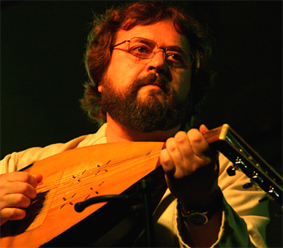
The rich folklore of the texts of these two women from Pusztina is rounded out organically with instrumental music for the most characteristic Moldavian Csángó dances (öves, kezes, vert kezes, szerba, burledeánka, korobjászka, virágtánc, kecskés, kettős, ruszászka, etc) (I:6, 9, 11,14,18,19; and II:2, 5, 9,13,15). The violin player of the band, Toader Bogdan, is from the little village next to Pusztina called Ripa. He is Pusztina’s favorite fiddler and has been playing at weddings and other dance events in Pusztina for decades. Toader Bogdan is accompanied by two other Moldavian musicians; Paun Vasile from the village of Radoaia, and Ágoston Félix Benke from Somoska – playing an old Moldavian lute–like instrument called ’koboz’ and drum."
(Vilmos Tánczos)
‡
Editors: Andrea Navratil, Bercel Nagy
Preface: Vilmos Tánczos
Sound engineer: Péter Péterdi
Cover design: István Berán
English translations: Sue Foy
‡
|
1. CD Advent
1.
„Az Úr angyala…” (Sung prayer) Christmas 2. „Mennyből az angyal…” (Christmas song, recommendation) 3. „Csordapásztorok…” (Christmas song) 4. „Mennyországban csengetének…” (Archaic folk prayer) 5. „Én felkőttem jó reggel hajnalba…” (Sung archaic folk prayer, christmas song) New Years 6. Kecskés – Capra (Dance melody) Winter party and dance season 7. Nagyidő ellen (Incantation) 8. „Ej de nálunk a faluba…” (Traditional song) 9. Öves – Bráu (Dance melody) 10. „Egy asszonnak vót egy parasztocska fija...” (Tale) 11. Ruszászka – Rusasca (Dance melody) 12. „Menyek az úton lefelé…” (Traditional song) 13. „Kerek a szőlő levele...” (Traditional song) 14. Kettős – Dedoi (Dance melody) 15. A restes legény és a serény leány (Myth of origin) Wedding 16. Nyirászabúcsúztató – Cánte cul miresei (Instrumental music) 17. „Mámámé, megbocsáss, ha valamit vétettem...” (Bride’s farewell - to her parents) 18. Tyúktáncoltatás – Gáiná (Dance melody, rhythmic yells)
19.
Szerba – Sírba (Dance melody) Soldiers’ songs, outlaws’ songs 20. „A kert fenekibe egy körtefa alatt…” (Soldiers song) 21. „Édesanyám mér’ szültél volt…” (Soldiers song) 22. „Hazám, hazám, csendes hazám…” (Outlaw song) 23. „Elment a madárka…” (Outlaw song) Lent 24. „Én felkelék szép piros hajnalba…” (Archaic folk prayer) 25. „Virágszombatond este…” (Lenten song) 26. „Lehullott a Jézus vére…” (Lenten song) Easter
27.
„Názáréti Jézus Krisztusunk…” (Archaic
folk prayer) 28. „Feltámadt Krisztus ez napon…” (Easter song) |
2. CD Summer
1.
„Pusztinai nagy hegy alatt…” (Traditional
song) 2. Vert kezes – Hora pe bátutá (Dance music)
3.
„Volt egy ember, felment a fára…” (Tale) 4. „Kapum előtt halastó...” (Traditional song) 5. Korobjászka – Corobiasca (Dance melody) 6. „Mikor leján voltam…” (Lament) 7. „Mikor kicsi lejány voltam…” (Lament) 8. Kezes – Hora moldoveneascá (Dance melody) 9. Ónöntés (Spell, incantation) Autumn 10. „Ne, hol etetgeti szép fehér pekurár...” (Ballad) 11. Pakulár nóta – Doina ciobanilor (Instrumental melody) 12. Tejelvétel (Incantation) 13. Burledeánka – Bárládeanca (Dance melody) 14. „Istenem, Istenem, ározd meg a vizet…” (Lament) 15. Virágtánc – Floricica (Dance melody) Caring for Children 16. „Fúdd el nagy szél, fúdd el…” (Lullabye) 17. Hiricelés ellen (Spell, incantation) 18. „Fúdd el jó szél, fúdd el…” (Lullabye)
19.
Gelka ellen, vízvetés, fejelfúvás (Spell,
incantation) 20. Miatyánk (Sung prayer) Death 21. „Én lefekszem én ágyamba…” (Archaic folk prayer) 22. „Krisztus kontráktot kötött az ördögvel...” (Myth of origin) 23. „Ó, életem végórája…” (Funeral song) 24. „Szent olvasót imádkoztunk...” (Offeratory Prayer) 25. „Anyám, édesanyám, megbocsásson...” (Farewell to the deceased) 26. Kyrie (Latin song for mass) |