Váltás magyar nyelvre

The town of Nagyszentmiklós (today called Sânnicolau Mare, located in Transylvanian Romania) has given the world two treasures. One of them is a golden trove which can be seen in Vienna’s Künst Historisches Museum; a masterpiece of goldsmith craft from the early middle ages. The other is Béla Bartók, who was without a doubt the most original personality in universal musical culture of the 20th Century. For those of us who take part in Hungary’s contemporary – but based on folk tradition - musical life, Bartók’s life-work has been especially exemplary. His staggering human and artistic greatness inspired our best writers to verse. I would like to mention here, some important things we have inherited from Bartók along with his masterpieces and folkloristic work. For example, the attitude of complete love, respect and patience with which he approached the village people who for centuries anonymously preserved and formed our values. Also, in defiance to our times’ taste for violence, like Bartók, we believe that folk song and instrumental traditional music are suitable for expressing both eternal human emotions and contemporary messages. Naturally this means anyone’s tradition or folk. For us, the thoroughness which characterized his pioneering field collection work and scientific classification has become our standard. For me personally, every aspect of Bartók’s life-work represents a true epitome of the Hungarian spirit.

This record was born in Bartók’s honour, on the 125th anniversary of his birth. The Budapest Spring Festival asked me to create a piece of music to go on the same program with Bartók’s ’Bluebeard’s Castle’. The idea was that Bartók’s sources for this opera - the most beautiful layers of Hungarian folk songs, ballads and instrumental folk music - should be performed by me and my colleagues. Specifically that we should make use of them in our own style, bringing them to life, re-creating our musical tradition. This is how ’Love’s doors’ came about; through the balladic world of Bartók’s opera - another story is told in a cycle of seven movements.

For help we summoned the dramatic density of folklore’s surreal and symbolic images along with the lively folk music and dance. Though we sing about mythical, poetically named women with fates similar to Judit’s, rather than leading to tragedy, ’Love’s doors’ lead to hope. The passages neither seperate nor conceal, they do not have doors locked with a key; they instead connect the many levels and paths of human feelings and emotions. Re-sounding, they propel our souls out of grief and sorrow into the light; out of misery towards recovery.


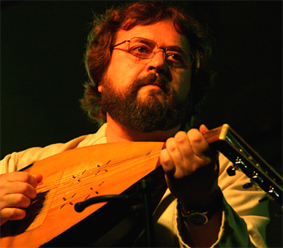
Ferenc Kiss


Performers:

Bea Palya, Ági Szalóki, Kati Szvorák – voice

Etnofon Music Consort: Ferenc Kiss – viola, voice; Zsigmond Lázár – violin; Mihály Huszár – double bass; Attila Korom – guitar; Dávid Küttel - synthesizer, accordion; Károly Babos – percussion

Hegedős Ensemble: Csaba Ökrös – violin; Sándor D. Tóth – viola; Zsolt Kürtösi - double bass

Kálmán Balogh – cymbalom

Mátyás Bolya – Moldavian lute, zither

Mihály „Dudás” Dresch – soprano saxophone, wooden flute

Pál Havasréti – hurdy-gurdy, percussion

Balázs „Dongó” Szokolay – wind instruments


Tracklist

:

Spring's Gate                           8:35

Valley of Ballads                   12:57

Enchanted Field                      6:27

Silk Meadow                           7:27

Citrus Forest                           4:57

Heaven's Door                        6:16

Dream Water                          6:56


Total:                                         53:38


We are grateful to the researchers who collected and published the folk music source material for ’Love’s doors’: Béla Bartók, Pál Péter Domokos, Zoltán Kallós, Zoltán Kodály, László Lajtha, György Martin, Lajos Vargyas.

The concert which provided the basis for this recording was brought about by the Budapest Spring Festival.